Explore Engineering
Explore the World of Engineering
Explore Engineering is a two week residential summer program designed to introduce rising high school students to various engineering majors. Our residential programs give students the full college feel, from buffet-style dining halls, premium-style dorms, and a packed schedule filled with learning, hands-on projects, and community building.
Our experience is completely dreamed of and designed by current undergraduate engineering students. Our students were intentional with designing activities and lessons that they wish they had when they were in high school. In addition, our Major Exploration presentations are designed and delivered by UConn’s World Class Engineering faculty.
Our next camp dates are Sun July 11 – Fri July 23, 2027
Early Bird: February 1, 2027
Standard Begins: March 1st, 2027
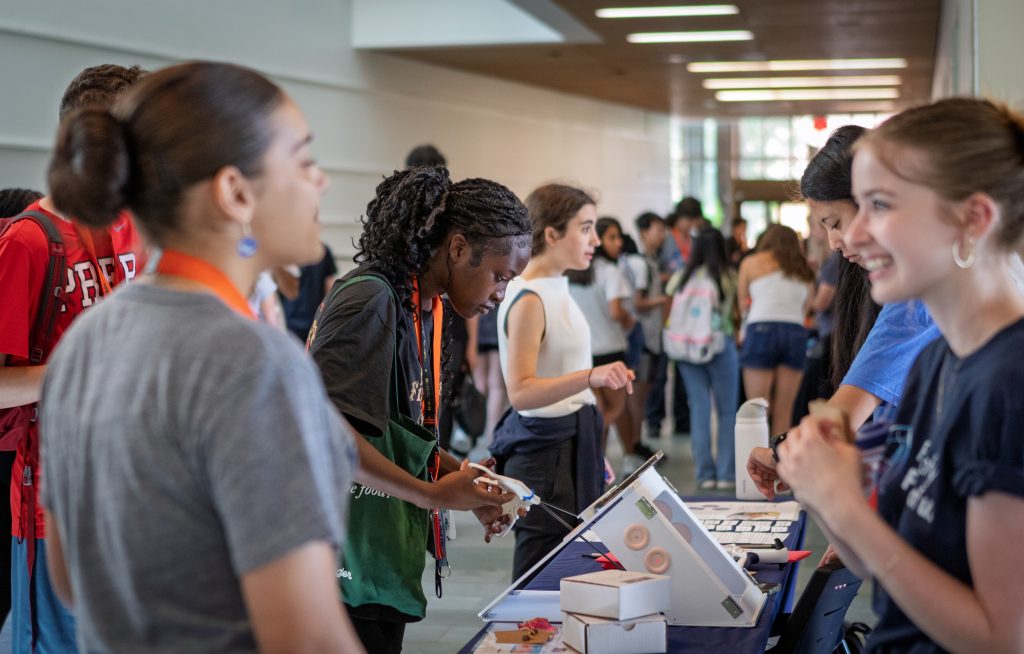
Who’s Eligible
Any high school (including home school) student who will be entering 9th – 11th grade in September 2027.
Out of state students are welcome. Airport transportation can be arranged
Rising seniors are welcome, though you may find our camp may not be challenging enough for you
Neurodivergent students are welcome, and we are ready to support you.
Timeline
Early Bird Deadline: March 1, 2027
Early Bird Acceptance Notification: March 15, 2027
Standard Deadline: April 15, 2027
Standard Acceptance Notification: April 29, 2027
Payment Window Without Financial Assistance: May 15 – June 30, 2027
Alternative deadlines with payment plans listed below.
Financial Information
Early Bird Applicants (Apply by March 1st, 2027): $3500
Standard Applicants (Apply by April 15th, 2027): $4000
Financial Assistance
Financial Assistance is awarded on a demonstrated need basis. This is built into our program application (no separate application needed)! The application will ask you to upload documentation (i.e.. unemployment, tax return, demonstration of free/reduced lunch, etc.)
- Payment Plans: Monthly payments available with final payments due by the summer program move in date.
- 25% Waiver: $1000 off, $3000 due
- 50% Waiver: $2000 off, $2000 due
- 75% Waiver: $3000 off, $1000 due
- 100% Waiver: $4000 off, $100 refundable deposit due
- Combination plans (waiver & payment plan) are also available.
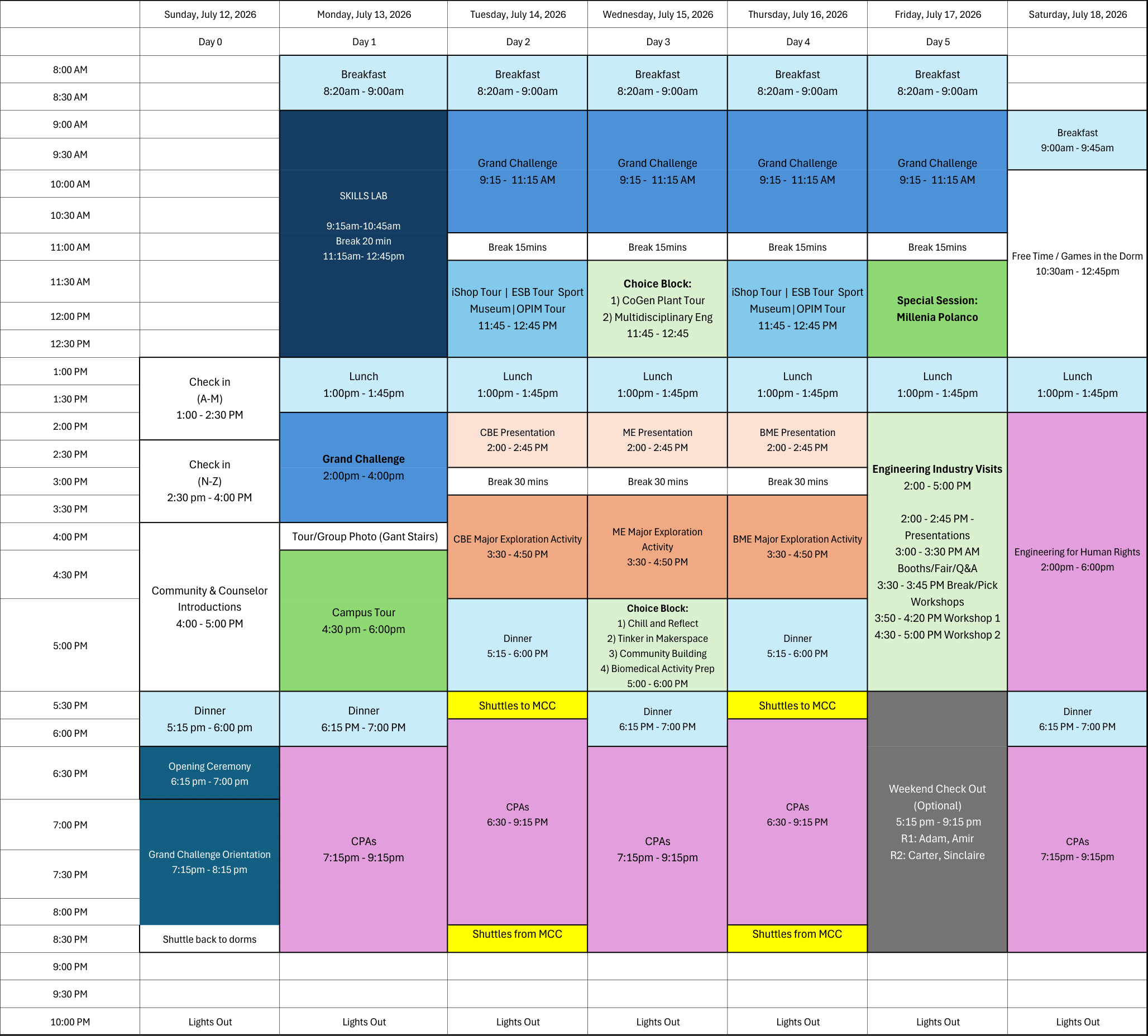
Schedule of Events
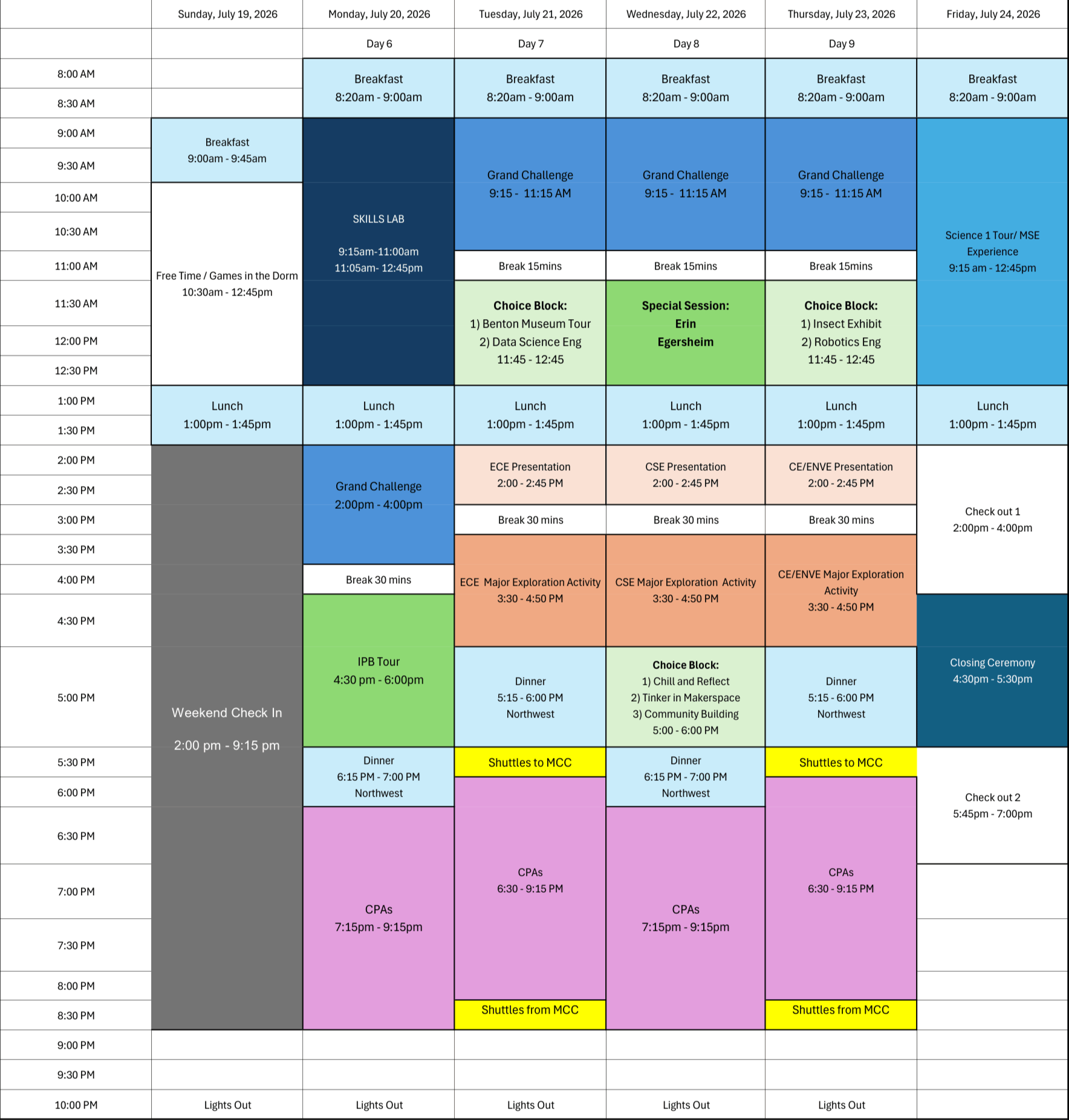
Our day starts at 8:20 AM with breakfast, and ends at 9:15 PM after evening activities like basketball, yoga, or movie night.
Our undergraduate student counselors have filled the day with activities, presentations, and breaks. Read below to learn more about what activities students can expect.
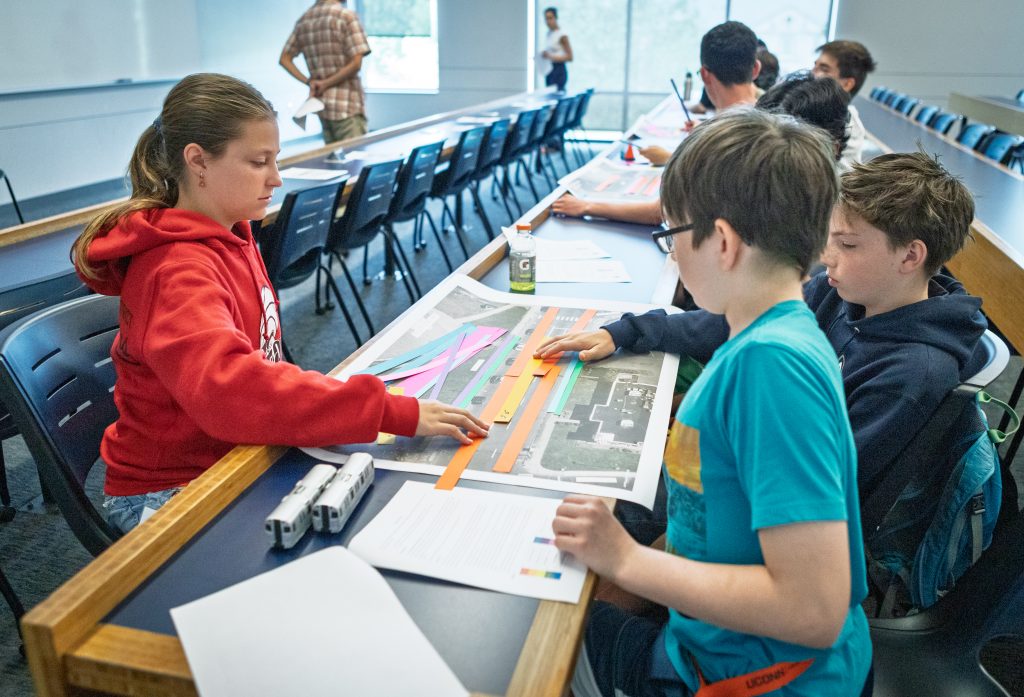
Skills Labs:
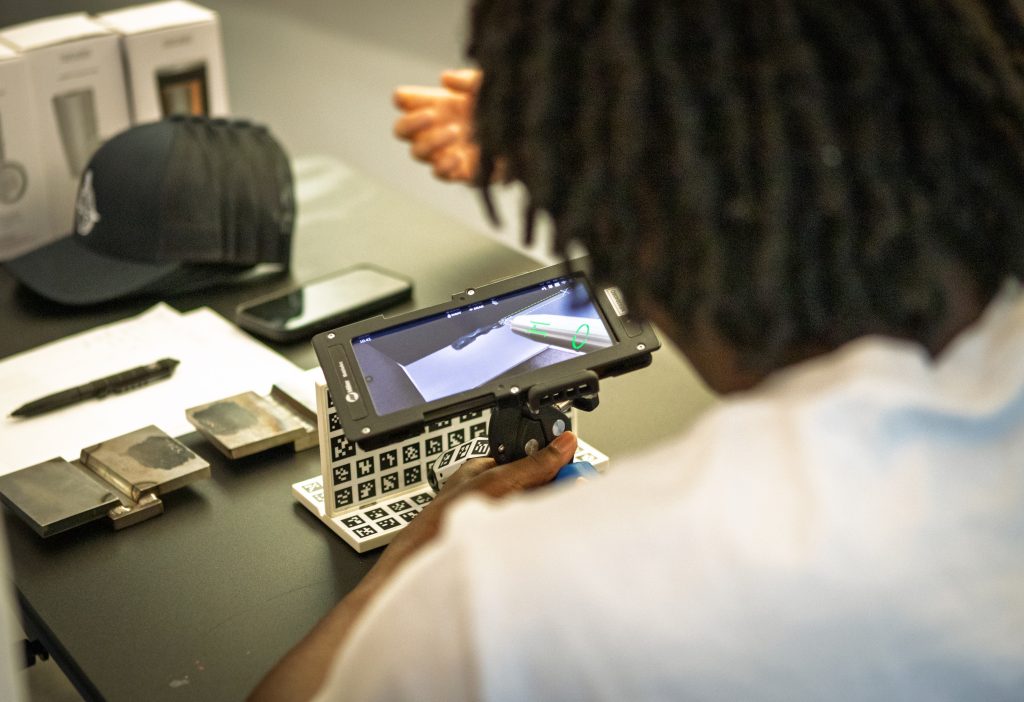
In this session, you will have time to learn and practice a new STEM skill, such as how to solder a circuit board. This skill will be used again later in the program, such as in a grand challenge or major exploration activity.
Tours:
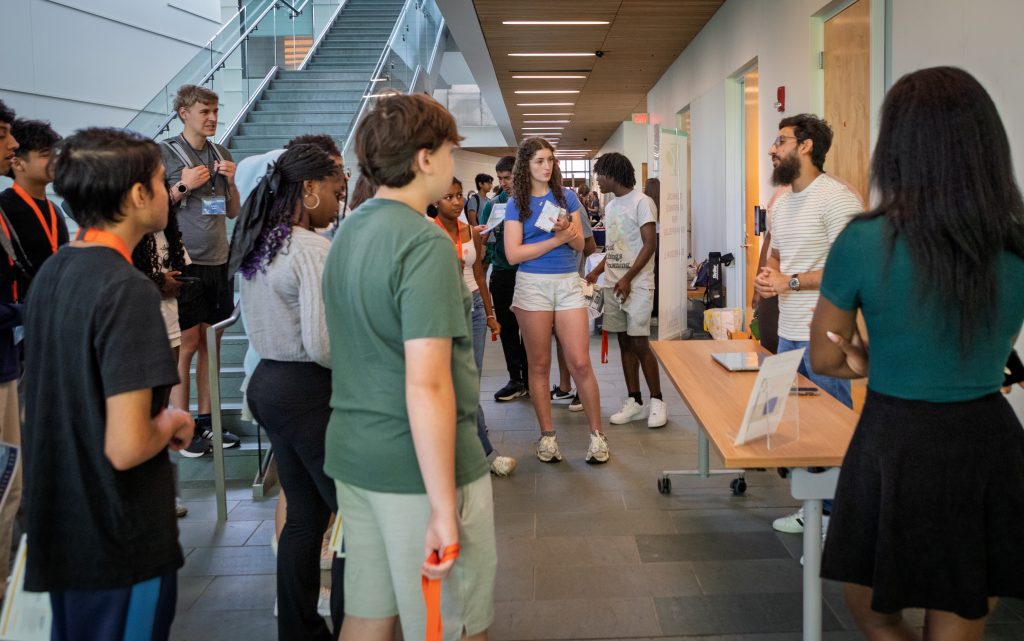
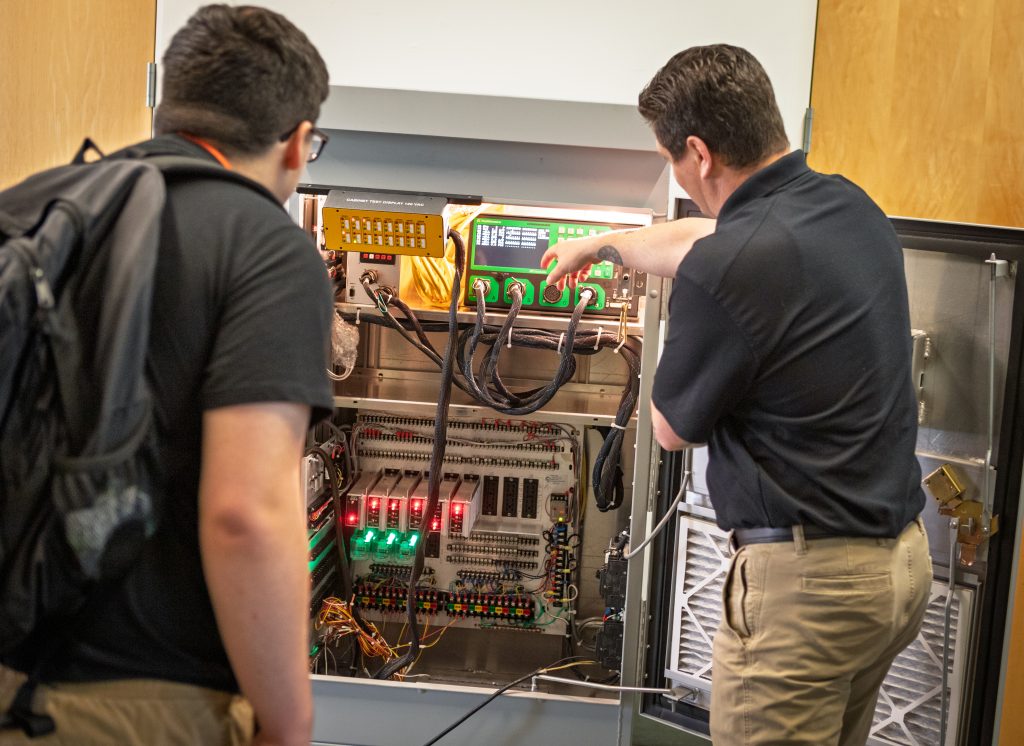
UConn has many world class facilities on the Storrs Campus! We are pleased to bring you to check out labs, museums, makerspaces, and other unique spots on campus
Counselor Planned Activities (CPAs):
After dinner, you’ll have the choice between (1) resting in the dorms, (2) a high energy activity like volleyball or going to the Mansfield Community Center, or (3) a low energy activity like a board game or movie night.
Weekend:
Saturday and Sunday are optional! Campers can go home for the weekend on Friday night or Saturday morning, and check back in on Sunday night. If you choose to stay, we’ve got a mix of rest and community time, as well as design challenges like our Engineering for Human Rights Challenge. Families are also welcome to visit on the weekend.
Closing Ceremony:
We welcome parents, families and friends to join us in celebration of the week! Some campers will present or showcase what they’ve been working on during the camp. We end with awards and some inspiration for the future.
Presentations (Major Exploration):
Delivered by our incredible engineering faculty, learn more about each major, what research is happening at UConn, and what you can do with each engineering degree. Students will explore Chemical and Biomolecular Engineering (CBE), Mechanical Engineering (ME), Biomedical Engineering (BME), Electrical and Computer Engineering (ECE), Computer Science and Engineering (CSE), Civil Engineering and Environmental Engineering (CE/ENVE), and Materials Science and Engineering (MSE).
Our philosophy is listen, learn, try, apply.
Listen and Learn:
Our incredible UConn faculty present about a different major each day. Hear about their journey, what kinds of research or applications faculty and students are working on in that major/department, and what kinds of jobs you could have after graduating.
Try and Apply:
Our undergraduate student leaders have designed an engaging hands on activity or challenge to help dive into that major/field. Examples include building a circuit to learn about electrical engineering, or designing an ecohouse that withstands the elements to learn about civil and environmental engineering.
Major exploration activities are led by our undergraduate student counselors with students in groups of 18-25. Our camp includes over 10 hours of designated major exploration! Students can choose to engage in additional major exploration during Choice Blocks, or always ask a counselor for their advice, experience, and perspective.
These activities are designed to be beginner-friendly. Our counselors are ready to add complexity or challenge for students with experience or who learn at a different pace than others.
Grand Challenge:
In our Grand Challenge Project, students deep-dive in a two-week multidisciplinary project. We estimate 18-25 students in each Grand Challenge. These are hands on projects that students have time to work on every weekday in the camp. Total project time: 21 hours!
This year’s Grand Challenges themes include ”Engineering for Accessibility”, “Engineering for Rescue”, “Engineering for Human Performance”, and “Engineering for Revitalization”.
Engineering For Accessibility
“Build Mobility. Design Equity. Engineer for Everyone.”
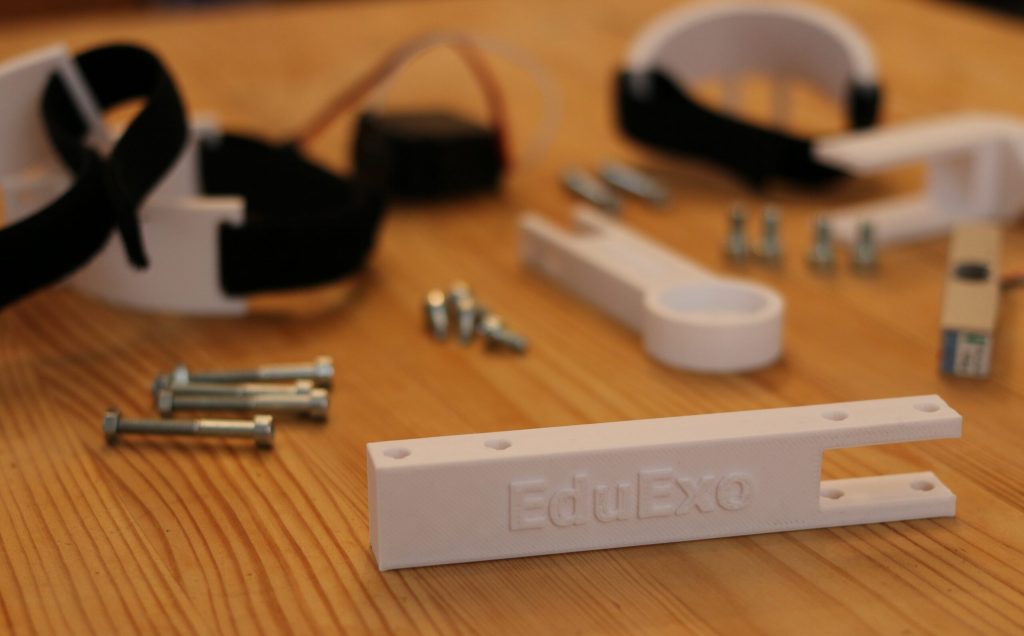
Assemble a functional prosthetic hand. Add creativity. Discover how engineering restores movement and expands what is possible.
In this two‑week challenge, you will construct a working prosthetic hand using biomedical components, mechanical linkages, and electrical circuitry. You will learn how engineers design devices that adapt to and empower real people.
What You Will Do:
• Design and Build: Assemble mechanical components, prototype joints and grips, and customize features based on user needs. Integrate simple circuitry for motion control.
• Test and Analyze: Experiment with dexterity tests and strength tasks to evaluate your prosthetic’s performance. See how design choices affect usability, comfort, and accessibility.
• Compete and Present: Showcase your prosthetic’s functionality, creativity, and engineering decisions. Compete for best grip strength, most user friendly design, and strongest accessibility innovation.
Why It Matters:
Engineers help people regain independence through thoughtful, human centered design. This challenge shows how biomedical, mechanical, and electrical engineering work together to create life changing solutions.
What You Will Gain:
• Hands on experience with fabrication, circuitry, and assistive technology
• Awareness of accessibility focused design and how engineers meet human needs
• Opportunities to innovate, problem solve, and build with purpose
Suggested for students interested in exploring:
Biomedical Engineering (BME), Computer Science & Engineering (CSE), Robotics Engineering (RE)
Engineering For Rescue
“Dive Deep. Build Bold. Engineer the Explorer Within.”
Design an underwater robot. Add cameras and tools. Navigate mission critical challenges below the surface.
In this two‑week challenge, you will engineer your own remotely operated vehicle (ROV) capable of completing underwater search, navigation, and rescue tasks. You will combine mechanical design, robotics, and electronics to create a machine built for exploration.
What You Will Do:
• Design and Build: Create a custom ROV using 3D modeling, waterproof electronics, thrusters, and a robotic arm. Solder circuits and assemble your vehicle for underwater performance.
• Test and Analyze: Drive your ROV through underwater obstacle courses using a live camera feed. Complete retrieval missions, maneuver tight spaces, and refine your design for stability and control.
• Compete and Present: Compete for fastest mission completion, best maneuverability, most innovative arm design, and strongest engineering presentation.
Why It Matters:
Underwater robotics is how engineers explore oceans, inspect infrastructure, and enable critical rescue operations. You will learn how robotics, design, and problem solving come together in real world engineering missions.
What You Will Gain:
• Hands on experience in robotics, electronics, 3D design, and remote system control
• Teamwork, creativity, and engineering process skills used by professionals
• A deeper understanding of how robots operate in extreme environments
Suggested for students interested in exploring:
Electrical Engineering (EE), Mechanical Engineering (ME), Materials Science & Engineering (MSE), Maritime or Naval Engineering
Engineering for Human Performance
“Measure Motion. Understand Strength. Engineer the Athlete in You.”
Design a force measuring platform. Add sensors. Watch your body’s performance come to life through real time data.
In this two week challenge, you will engineer your own force plate system using heart rate sensors, motion tracking, and load cell technology. Then you will test jumps, landings, and movement patterns to see exactly how your body produces and absorbs force. Student athletes are welcome, and you do not need to be athletic to be a part of this grand challenge.
What You Will Do:
• Design and Build: Construct a custom force plate and integrate heart rate and motion capture sensors. Work with circuitry, hardware, and coding to bring your device online.
• Test and Analyze: Run movement tests such as vertical jumps and agility drills and watch live force curves on your computer. Learn how engineers quantify strength, asymmetry, and recovery.
• Compete and Present: Demonstrate your data insights and device performance. Compete for most accurate force capture, best visualization, most innovative design, and strongest technical presentation.
Why It Matters:
This is the technology used by professional athletes, physical therapists, and biomedical engineers to prevent injury, improve performance, and understand human biomechanics. You will work with tools that drive modern sports science and rehabilitation.
What You Will Gain:
• Hands on experience in biomechanics, sensors, coding, and data visualization
• Skills in teamwork, problem solving, and technical communication
• Insight into how engineering supports human performance, health, and recovery
Suggested for students interested in exploring:
Biomedical Engineering (BME), Computer Science (CS), Mechanical Engineering (ME), Multidisciplinary Engineering (MDE)
Engineering for Revitalization
“Build Clean. Restore Systems. Engineer a Healthier World.”
Design environmental solutions. Study real data. See how engineering protects the places where people live, work, and play.
In this two‑week challenge, you will engineer systems that monitor, clean, or restore environmental resources such as water, soil, or air. You will combine civil, chemical, and environmental engineering principles to measure pollutants and design solutions that improve community health.
What You Will Do:
• Design and Build: Develop a restoration system such as a water filtration unit, soil remediation setup, or air quality sensor array. Use real materials and environmental testing tools.
• Test and Analyze: Run water or air quality tests, monitor contaminant levels, and evaluate how effectively your engineered system improves environmental conditions.
• Compete and Present: Compete for best environmental impact, strongest data analysis, most sustainable design choice, and most compelling engineering presentation.
Why It Matters:
Engineers restore ecosystems, rebuild infrastructure, and design cleaner, safer communities. This challenge shows how environmental engineering protects public health and supports sustainable development.
What You Will Gain:
• Experience in environmental testing, materials analysis, and system design
• Skills in teamwork, communication, and engineering decision making
• A deeper understanding of how engineering revitalizes communities and ecosystems
Suggested for students interested in exploring:
Civil Engineering (CE) Chemical Engineering (CHEG), Environmental Engineering (ENVE)
Questions?
Thank you for your interest in Explore Engineering! If you have any questions, please email engr-explore@uconn.edu.
Last updated on October 19th, 2026