On TRAC for Transfer Year Summer
Transfer, Readiness, Academic, Connection
About On TRAC
On TRAC for Transfer Year Summer is a dedicated summer experience designed for students entering their ~3rd year as they transfer into UConn or transition from a regional campus into a STEM major. This program provides the academic preparation, community connection, and hands‑on experience needed to make a strong, confident start in UConn’s rigorous STEM pathways.
Running during the same time frame as our Sophomore Summer programming—and sharing the same high‑impact Practicum Experiences—On TRAC supports students in building momentum before their first full semester at Storrs.
Empowering Futures
The Vergnano Institute for Impact is committed to building connection and passion in engineering and STEM fields.
Our programs are for everyone.
In particular, we welcome and encourage students who are…
– first in their family to go to college, or
– attending a Title I school or district, or
– have participated in English language learning classes, or
– looking forward to meeting their first engineer,
…to apply!
Who’s Eligible?
Any college student who will be entering their junior year in Fall 2026 as they transfer into UConn or from a regional campus into a STEM major.
This is our pilot year for this program. We seek a small group of students to be a part of the inaugural cohort.
Neurodivergent students are welcome, and we are ready to support you.
Apply by Sunday, March 29 2026!
Why On TRAC?
- Helps transfer and campus‑change students hit the ground running.
- Builds early academic and social connection to UConn STEM.
- Strengthens confidence before entering demanding junior‑level classes.
- Offers flexibility for students with work or life commitments.
- Integrates students into research networks and faculty communities.
- Mirrors the structure and success of our established Sophomore Summer model.
On TRAC for Transfer Year Summer ensures that new UConn Storrs Huskies step into their first year on the Storrs campus with readiness, momentum, and a sense of belonging.
Academic Pathways
Students choose the academic format that best fits their learning style and summer schedule.
Participate in selected non‑credit STEM courses offered through the Sophomore Summer Track. These small, instructor‑supported classes are designed to strengthen foundations, build academic confidence, and prepare students for upper‑division coursework.
Designed for students balancing work, commuting, or personal responsibilities. Students complete self-determined online learning modules and meet weekly with a UConn professor for guidance, accountability, and personalized support.
Skills Lab
Our second major goal in On TRAC for Transfer Year Summer is to prepare transfer and campus‑change students with the professional fluency and confidence needed to step into on‑campus roles, internships, and research positions as early as their first semester at Storrs. Skills Lab functions as your “third class” during the program and is designed to build both your résumé and your voice.
Focus Areas
Students receive training in communication, pedagogy, and inclusive instructional practices to become strong candidates for UTA positions across engineering, STEM, and computing courses. You’ll learn how to break down difficult concepts, support peers, and contribute meaningfully in UConn classrooms.
Transfer students bring real insight—work experience, family responsibilities, community engagement, multilingualism, and more. Skills Lab helps you identify, articulate, and translate these lived experiences into competitive advantages when applying for:
- On‑campus tutoring or mentoring roles
- Research positions
- Learning community leadership positions
- Paid academic support jobs
Throughout the summer, you’ll assemble a digital portfolio that features:
- Reflections on lived experience and identity
- Examples of technical or academic work
- Artifacts from your practicum (figures, designs, code snippets, lab outputs)
- A skills inventory to highlight your strengths
This portfolio becomes a powerful tool when applying for fall research opportunities, jobs, or internships.
With faculty and mentor guidance, you’ll draft and refine:
- A personal statement
- A research interest statement (if applicable)
- A professional introduction (“elevator pitch”)
We’ll help you craft a narrative that is authentic, compelling, and competitive — something that places you “at the top of the internship pile” and helps you stand out in professional settings.
Practicum Experience (Shared with Sophomore Summer)
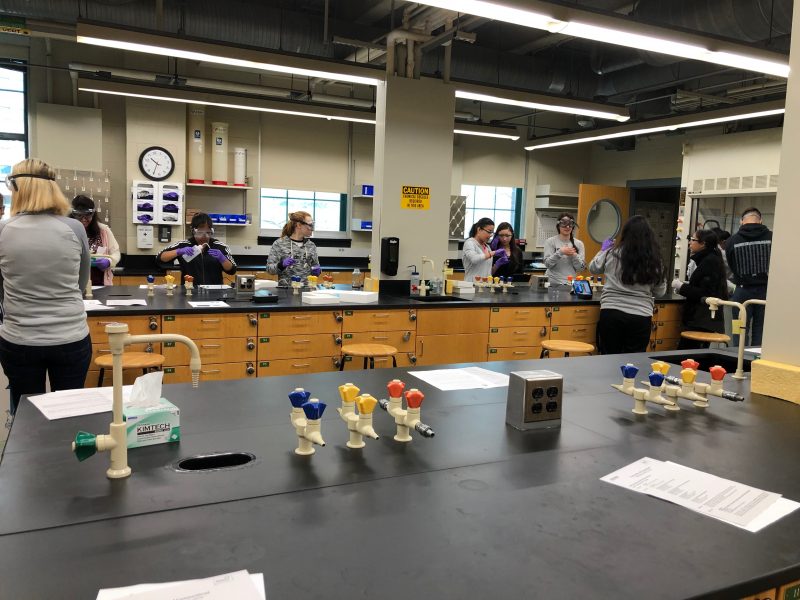
All participants engage in full‑day practicum sessions on Tuesdays and Thursdays, choosing from a wide range of micro-research and micro‑internship options. Practicums connect students with faculty, labs, and research teams across campus—helping transfer students quickly integrate, build technical identity, and gain hands‑on experience before junior‑level courses begin.
Our third goal is to provide you meaningful hands on experiences to supplement your learning and identity formation as a scientists and engineer. This is kind of like a micro-research or micro-internship project. We call this our practicum.
Your Practicum time is a full day on Tuesdays and Thursdays (i.e. 9 AM – 5 PM with lunch break).
In total, you will experience 8 sessions of full day experiences, plus a bit of at home reading or tasks to supplement your project.
Under the mentorship of Dr. George Lykotrafitis, Professor of Mechanical Engineering and an expert in cell biomechanics, students will explore how the mechanical properties of cells influence—and are influenced by—disease and physiological function. Dr. Lykotrafitis’s lab investigates how changes in cell membranes, cytoskeletal structures, and cellular interfaces affect processes such as red blood cell deformation, adhesion, and membrane stability, integrating experimental techniques like atomic force microscopy (AFM) with computational modeling. His group is well‑known for combining single‑cell force spectroscopy, nanoscale imaging, and molecular‑dynamics–based modeling to understand the biophysical mechanisms underlying disorders such as sickle cell disease.
In this microresearch experience, students will work closely with Dr. Lykotrafitis and his graduate researchers to analyze how cells respond to mechanical stress, adhesion forces, and microenvironmental cues. Activities may include examining red blood cell elasticity, quantifying cell–substrate interactions, and interpreting nanoscale structural changes using AFM‑generated force curves and topographical images—skills central to modern biomechanical research. This hands‑on experience offers a rare look into how experimental cellular mechanics and computational analysis converge to unravel fundamental biological behavior and support translational advances in diagnostics and therapeutics.
Suggested STEM Majors
- Biomedical Engineering
- Mechanical Engineering
- Materials Science & Engineering
- Biological Sciences
- Molecular and Cell Biology
- Chemical Engineering (biological/biomolecular focus)
- Physics (soft matter, mechanics)
Electrospray technology is reshaping modern separation science by enabling the fabrication of ultra‑thin, high‑performance membranes for water purification, gas separation, and ion‑exchange applications. Traditional membrane manufacturing methods—largely unchanged for decades—struggle to incorporate emerging advanced materials. Electrospray overcomes these limitations by using finely controlled, nanoscale deposition techniques that allow researchers to design membranes with unprecedented precision and tunability.
In this microresearch experience, students will contribute to the development of next‑generation separation membranes using materials previously incompatible with conventional processing. Working alongside researchers in the Center for Clean Energy Engineering and the Center for Applied Separation Technologies (CCAST), students will explore how electrospray enables higher separation efficiency, improved durability, and scalable membrane production for real‑world environmental and industrial challenges.
Learn more: https://ccast.uconn.edu/
Suggested STEM Majors (All STEM majors welcome)
- Chemical Engineering
- Environmental Engineering
- Materials Science & Engineering
- Mechanical Engineering
- Chemistry
- Environmental Science
- Polymer Science
- Nanotechnology / Nanoscience
Students in this microresearch experience will work with the newly renovated Cynthia Wyeth Peterson Memorial Planetarium, the oldest planetarium in Connecticut, originally built in 1954 and reopened in 2024 after extensive upgrades including a modern digital projector, new seating, and a fully updated audio system. Under the guidance of planetarium staff, students will learn how to create engaging, scientifically accurate planetarium shows that bring astronomy, physics, and Earth sciences to life for audiences of all ages. The planetarium now hosts weekly public programs and serves as a teaching tool—making it an ideal platform for students to contribute original content that will be experienced by the broader UConn and Connecticut community.
Participants will explore celestial mechanics, stellar evolution, planetary science, and other astronomy topics while learning storytelling, scripting, visual production, and digital dome‑projection techniques. This project leverages the planetarium’s advanced projection capabilities—highlighted during its revitalization as offering impressive visual effects and constellation artwork—to help students create immersive and educational shows. Alongside faculty and graduate mentors, students will help expand the planetarium’s library of educational programming while gaining hands‑on experience in science communication, multimedia production, and public outreach.
Suggested STEM & Creative Majors
- Physics / Astrophysics
- Earth Sciences / Geography
- Mechanical Engineering (optics, instrumentation)
- Computer Science / Computer Engineering (simulation, graphics)
- Digital Media & Design
- Multimedia Design & Animation
- Science Education
Guided by Dr. Daniele Vivona, a new Assistant Professor in Mechanical Engineering whose research focuses on ion transport, interfacial phenomena, and next‑generation electrochemical energy devices, this microresearch experience introduces students to the science behind how sensors and batteries respond to real-world operating conditions. Students will begin by using simple conductivity tests and at‑home tools to study how and why sensor readings drift over time—exploring stabilization time, temperature dependence, and fouling effects. These experiments reveal how subtle changes at material interfaces influence the accuracy and reliability of electrochemical measurements, directly connecting to the same principles that govern modern energy materials and battery systems.
The project culminates in a dedicated hands‑on lab session using a research‑grade potentiostat, where students will perform formal electrochemical characterization techniques such as cyclic voltammetry or impedance spectroscopy. By comparing their at‑home observations with high‑precision laboratory data, participants gain a deeper understanding of the electrochemical processes that underpin sensing technologies and battery performance. This experience is especially well‑aligned with Dr. Vivona’s expertise in atom‑level energy conversion processes and advanced electrochemical materials design.
Suggested STEM Majors
- Mechanical Engineering
- Materials Science & Engineering
- Chemical Engineering
- Electrical Engineering
- Chemistry
- Environmental Engineering
- Physics (materials, interfaces, electrochemistry)
In collaboration with Dr. Ravi Gorthala and the UConn team supporting the U.S. Department of Energy’s Elevating Smart and Resilient Schools for America initiative, this microresearch experience invites students to help translate real energy‑efficiency upgrades happening in Bridgeport Public Schools into meaningful, age‑appropriate STEM learning. As two Bridgeport schools undergo deep energy retrofits—including HVAC retro‑commissioning, advanced controls, high‑efficiency boilers, solar + battery systems, and building weatherization—students in this project will design educational modules that help K–5 and middle school learners understand the science behind the improvements being made in their own buildings.
Participants will work on creating engaging, hands‑on, and highly interactive teaching tools. These could include: building VR worlds that help students see how energy flows through a school; creating mini‑experiments that demonstrate heat transfer, air quality, or renewable energy; or developing demonstrations that show how smart controls, solar power, and efficient systems reduce cost and pollution. By merging engineering with community impact, students contribute directly to a nationwide DOE effort supporting healthier, more resilient schools—while empowering Bridgeport youth to see themselves as energy innovators in their community.
Suggested STEM Majors
- Mechanical Engineering
- Environmental Engineering
- Chemical Engineering
- Civil Engineering (Building Systems / Sustainability)
- Electrical Engineering
- Materials Science & Engineering
- Environmental Science
- Computer Science (VR/AR, simulation, visualization)
- Education & STEM Education majors interested in curriculum design
Under the guidance of Prof. Mohammad Maifi Hasan Khan, an Associate Professor in Computer Science & Engineering whose research focuses on human‑automation interaction, trust, risk communication, and usable cybersecurity, this microresearch experience invites students to investigate how everyday users understand, react to, and manage security risks associated with common Internet‑of‑Things (IoT) devices such as smart speakers, indoor video cameras, and home automation systems. Prof. Khan’s work includes nationally recognized studies on user emotions, trust, system reliability, privacy behaviors, and post‑breach risk communication, making this an ideal opportunity for students interested in the intersection of psychology, communication, and technology.
Students will participate in hands‑on research tasks such as designing user studies, evaluating how people perceive risk or make security decisions, analyzing communication strategies for warning messages, and developing recommendations to improve security‑related behaviors in the public. This project offers meaningful engagement with real‑world cybersecurity challenges that directly shape national security and digital safety. Participants will strengthen communication, writing, analytical reasoning, and presentation skills, while contributing to cutting‑edge work that explores how human psychology influences cybersecurity outcomes.
Suggested Majors
- Psychological Sciences
- Cognitive Science
- Human Development & Family Sciences
- Communication
- STEM Education / Educational Psychology
- Computer Science (HCI / usability focus)
- Information Science / Data Science
- Sociology (technology & society focus)
The UConn Physics Observatory—located on North Eagleville Road and historically used for student labs and public stargazing events—has faced technical limitations in recent years due to aging infrastructure and equipment constraints. Although the observatory has served generations of students and community members, its current telescope system suffers from broken motorized components that prevent full functionality and automated tracking, limiting its capacity for educational use and night‑sky observation. This microresearch experience invites students to restore and modernize the observatory by diagnosing the failed motor system, designing a replacement or retrofit solution, and implementing hardware and software upgrades to re-enable automated telescope control.
Working with Physics Department mentors, students will gain hands‑on experience in mechanical repair, electronic systems integration, embedded programming, and automation. The project may involve designing custom motor mounts or controllers, implementing microcontroller‑based automation, calibrating tracking accuracy, and testing nighttime operation. By the end of the experience, students will not only help revive a historic campus facility but also contribute to expanding future teaching, outreach, and research capabilities at the observatory—aligning with ongoing efforts across campus to revitalize UConn’s astronomy resources and public engagement programs.
Suggested STEM Majors
- Mechanical Engineering
- Electrical Engineering
- Computer Engineering
- Computer Science (embedded systems, automation)
- Astrophysics / Physics
- Robotics Engineering
This project focuses on engineering an affordable, 3D‑printed robotic prosthetic hand designed to enhance accessibility for mobility‑challenged individuals while serving as a powerful educational tool for students. Using modified open‑source components, high‑torque servos, and custom‑built flex sensors, the hand is programmed to mirror human finger movements through a glove‑based sensor interface. Students gain experience across the full engineering design cycle—mechanical construction, tendon‑driven actuation, sensor fabrication, microcontroller programming, and iterative calibration—resulting in a functional prosthetic model capable of smooth, lifelike articulation and responsive control.
Beyond creating a working robotic hand, this project immerses students in the interdisciplinary nature of prosthetic engineering. By integrating mechanical systems, embedded electronics, computational logic, and human‑centered design, students deepen their understanding of how assistive technologies are developed and refined. The project also encourages thoughtful engagement with accessibility, empathy, and real‑world constraints such as durability, cost, and usability—showing students that they can meaningfully contribute to innovations that directly impact people’s lives.
Suggested STEM Majors
- Biomedical Engineering
- Biology or Pre-Med Majors
- Electrical Engineering
- Robotics Engineering
- Computer Engineering
The NEXT (Nurturing Excellence and eXperience in Technology) Program—developed in collaboration with The Cigna Group—offers School of Computing students a unique opportunity to build industry-ready skills in cloud computing, full-stack development, and modern software engineering practices. Drawing from real-world challenges and insights provided directly by Cigna engineers, participants engage in training, hands-on development, and mentorship designed to strengthen both their technical abilities and professional readiness.
Students selected for this practicum will begin with on-campus micro research engagement via virtual mentorship, and in person team collaboration during Sophomore Summer, and then continue virtually through August 11, dedicating ~10 hours per week to training, project work, and small‑group collaboration. Topics covered mirror industry expectations—Agile, DevOps, front‑end and back‑end development, cloud computing, secure programming, and SRE—ensuring participants walk away with a polished portfolio project, 1:1 mentorship, meaningful industry connections, and a certificate of completion.
Required Majors (School of Computing)
- Computer Science
- Computer Science & Engineering
- Computer Engineering
- Data Science
Led by experienced undergraduate and graduate members of the UConn Underwater Robotics Club, this microresearch experience invites students to explore the rapidly evolving world of autonomous underwater systems. Participants will work hands‑on with Remotely Operated Vehicles (ROVs) and underwater sensor technologies, gaining exposure to mechanical design, waterproofing strategies, buoyancy control, electronics integration, and real‑world problem solving in aquatic environments.
Inspired by the club’s growing momentum and competitive aspirations—highlighted in recent UConn Today coverage—the project introduces students to the engineering, programming, teamwork, and iterative design processes that define marine robotics. Students will help design, build, and test components that contribute to the team’s competition-ready platforms while learning how underwater robotics can address environmental monitoring, marine research, and exploration challenges.
Inspiration link: https://today.uconn.edu/2024/08/underwater-robotics-club-members-keen-to-compete-after-taking-first…
Suggested STEM Majors
- Mechanical Engineering
- Electrical Engineering
- Computer Science & Engineering
- Ocean Engineering / Marine Technology
- Robotics Engineering
- Materials Science & Engineering
- Environmental Engineering
- Physics
Led by Dr. Yuyang Wang, a newly arrived Assistant Professor in Electrical and Computer Engineering at UConn, this microresearch experience brings together cutting‑edge semiconductor research and immersive virtual reality. Dr. Wang’s work centers on large‑scale integrated photonic systems, next‑generation chip architectures, and computing‑focused photonics—areas aimed at overcoming communication bottlenecks in advanced computing and AI hardware.
In this project, students will help design, build, and test VR headsets and virtual environments that allow users to “step inside” a computer chip. The goal is to create clear, interactive visualizations showing how chips are structured, how signals move through photonic and electronic components, and how modern semiconductor manufacturing processes work—from lithography to heterogeneous 2.5D/3D integration. By translating complex device physics and fabrication flows into engaging VR experiences, students will contribute to tools that can support education, outreach, and future research visualization. This is an ideal opportunity for students interested in semiconductors, photonics, chip design, VR/AR development, or engineering education.
Suggested STEM Majors
- Electrical Engineering
- Computer Engineering
- Computer Science (VR/AR, 3D visualization, simulation)
- Mechanical Engineering (design, modeling, visualization)
- Materials Science & Engineering (semiconductor fabrication literacy)
- Robotics / Systems Engineering
- Digital Media & Design (interactive and immersive technologies)